

 MOUIG S25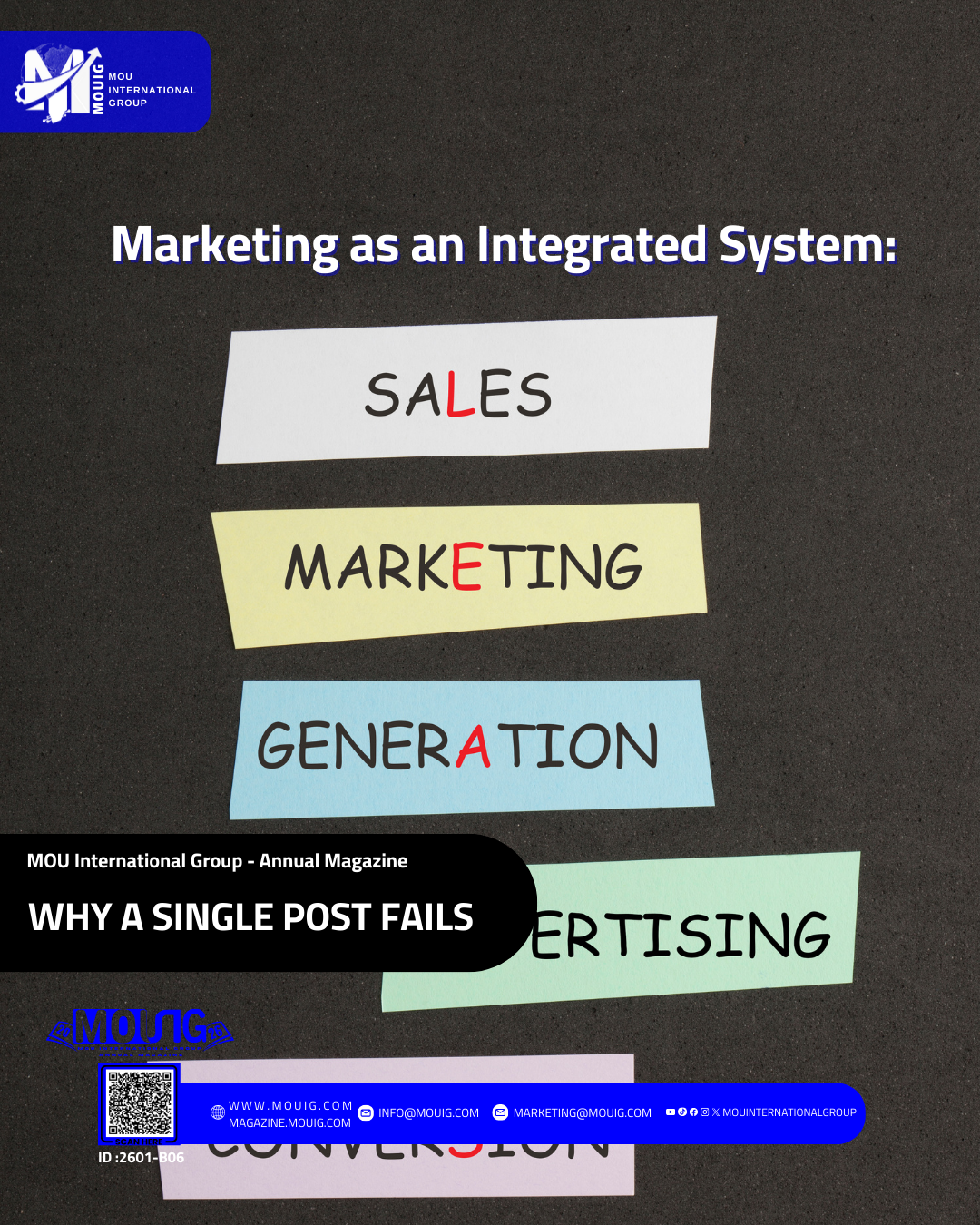
In the digital age, many brands and business owners continue to place their hopes on a single social media post—a viral moment, a highly engaging video, or a visually striking design—believing it will be the turning point for their marketing success.
However, real-world experience and data consistently reveal a different truth:
a single post rarely builds a brand, and almost never creates lasting impact.
So why does this approach fail? And what is missing from the way marketing is commonly understood today?
The Illusion of the “One-Hit Success”
Modern marketing culture is heavily influenced by stories of overnight success. Viral posts and trending videos dominate conversations, often presented as isolated victories.
What is rarely highlighted is what came before those moments:
months of consistency, repeated messaging, audience education, and brand positioning.
Relying on a single post is comparable to introducing yourself once and expecting to be remembered and trusted long afterward. Human memory—and brand perception—simply does not work that way.
Marketing Is Not Content — It Is a System
Effective marketing is not about producing content in isolation. It is an integrated system built on interconnected elements, including:
A clear and consistent message
Deep understanding of the target audience
Continuity over time
Multiple perspectives around the same idea
Alignment across platforms and formats
When a post is published without being part of this system, it becomes fleeting noise—regardless of how creative or polished it may be.
A Common Scenario: Engagement Without Impact
It is not uncommon to see posts that achieve strong engagement—likes, shares, and comments—yet fail to leave any lasting impression.
Days later, the audience may remember the content but not the brand behind it.
There is no recall, no differentiation, and no mental association.
The reason is simple: the content existed as a standalone moment, not as part of a broader narrative.
How Brands Are Actually Built
Strong brands are not built on isolated creativity, but on strategic consistency.
They do not ask:
“What should we post today?”
Instead, they ask:
“What do we want to be known for over time?”
That core idea is then expressed through:
In-depth articles that explore it
Social posts that simplify it
Visual content that attracts attention to it
Practical examples that reinforce it
In this way, content becomes a tool for shaping perception—not an end in itself.
Why the Single Post Fails
The failure of the “one-post strategy” can be attributed to several key factors:
Lack of repetition and reinforcement
Unclear or inconsistent messaging
Absence of strategic context
Overreliance on short-term engagement metrics
Measuring success by immediate reactions rather than long-term impact
Without continuity, even the most engaging content fades quickly from memory.
Marketing in the Digital Era: Strategic Patience
In a fast-paced digital environment, patience may seem counterintuitive. Yet the brands that endure are those that understand marketing as a cumulative process.
Real results emerge not from a single piece of content, but from a carefully designed system that builds awareness, familiarity, and trust over time.
Conclusion
A single post may capture attention—but attention alone is not impact.
True impact is created when every piece of content contributes to a larger story, a clearer identity, and a long-term vision.
In a crowded digital landscape, it is not enough to be seen once.
What truly matters is being remembered.
Published as part of the editorial content of
MOU International Annual Magazine
A digital publication exploring contemporary marketing thinking and digital transformation.